If you are looking for a kitchen that combines modern design and luxury, cladding is the ideal choice: it gives you an attractive look and a high ability to withstand daily use. That is why it has been in great demand recently, thanks to being easy to clean, durable and beautiful. When choosing cladding, it is important to know the advantages and disadvantages of cladding kitchens.
What are cladding kitchens?
Cladding consists of panels made of two layers of aluminium with an inner core of moisture- and fire-resistant material between them. The panels withstand heat and scratches well, and resist environmental factors such as sunlight.
Advantages and disadvantages of cladding kitchens
Cladding is one of the most widely used options in modern designs, combining high durability with an elegant look. Here are the main advantages and disadvantages to know before you buy, starting with:
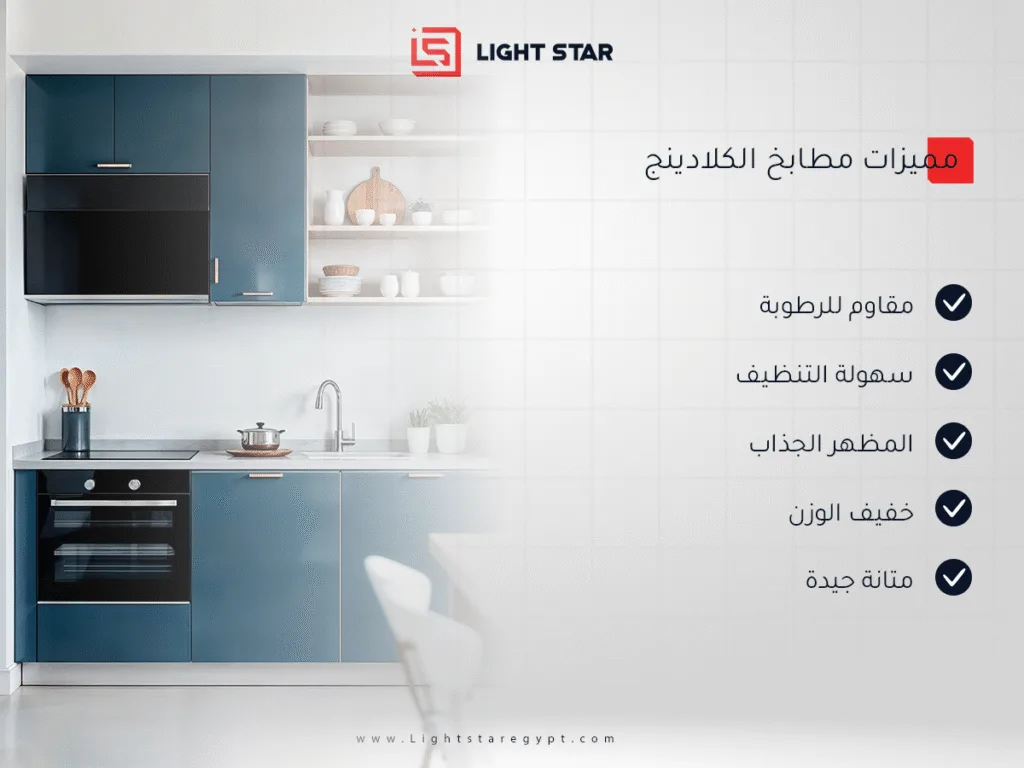
Advantages of cladding kitchens
Moisture resistant
Cladding kitchens resist moisture and heat and are not affected by steam or water, making them a practical choice for everyday kitchen conditions.
Easy cleaning
A smooth surface makes it easy to clean with no effort, helping the kitchen stay elegant all the time.
An attractive look
Cladding offers a wide range of colours and designs, giving the kitchen a glossy, attractive look.
Lightweight
A cladding kitchen is lightweight, so it can be installed quickly, and it doesn’t need frequent maintenance.
Good durability
It is rigid and withstands daily use without losing its shape or elegance over time.
Disadvantages of cladding kitchens
Despite its many advantages, cladding has some drawbacks, and it is important to know them before deciding to buy.
Can scratch
It is less scratch-resistant, so take care with sharp tools, as damage can build up gradually over time.
Cost
Cladding kitchens are relatively expensive compared with other types.
Sensitive to chemicals
Some chemicals and strong cleaners can affect it, which may affect its colour and gloss.

Cladding kitchen colours for 2025
Cladding comes in a wide range of colours and finishes, and at Light Star we will help you choose the latest colours and modern designs to suit your refined taste, such as:
White
Makes small spaces look bigger and gives the kitchen a clean, modern look all the time; suitable for every type of kitchen.
Grey
A modern colour that gives a feeling of calm and comfort, suitable for many interiors.
Beige
A comfortable, calm colour that adds a touch of refinement and beauty to your kitchen.
Wood tones
Give your kitchen a look of luxury and beauty, and add a warm, natural feel to the design.
Green
Suits natural-style interiors, giving a feeling of nature and freshness.
Black
Gives a luxurious, elegant look, especially in modern designs.
Blue
Gives a distinctive look and adds a touch of calm to your kitchen.
What does a metre of cladding kitchen cost?
The factors that affect the price per metre of cladding are the manufacturing quality, the type of material, the panel thickness, the designs and colours, and the brand.
- Economy cladding: between EGP 2,500 and 3,500.
- Mid-quality cladding: between EGP 4,000 and 5,500.
- High-quality and imported cladding: up to EGP 7,000.
Are cladding kitchens resistant to heat and moisture?
Yes — cladding kitchens are made from materials that resist heat, moisture and steam without being affected, which makes them an excellent choice for kitchens exposed to these conditions a lot. They keep their shape and good looks for a long time without losing their strength.
What is the difference between cladding and Alumetal kitchens?
Having covered the pros and cons of cladding kitchens, let us look at how they differ from Alumetal kitchens, to help you choose what best fits your needs and budget.
Base material
Cladding kitchens: made of aluminium and polyethylene panels.
Alumetal kitchens: have an inner infill such as fibre or glass.
Durability
Cladding kitchens: very strong and excellently scratch-resistant.
Alumetal kitchens: good durability but less scratch-resistant.
Heat and moisture resistance
Cladding kitchens: good moisture resistance and not affected by steam or water, making them ideal for daily use.
Alumetal kitchens: good, but can be affected by high temperatures over time.
Cost
Cladding kitchens: cost more than Alumetal.
Alumetal kitchens: cost less than cladding and are a good choice for limited budgets.
Installation
Cladding kitchens: need precise installation by specialists to keep their quality.
Alumetal kitchens: easier and quicker to install, but need constant maintenance.
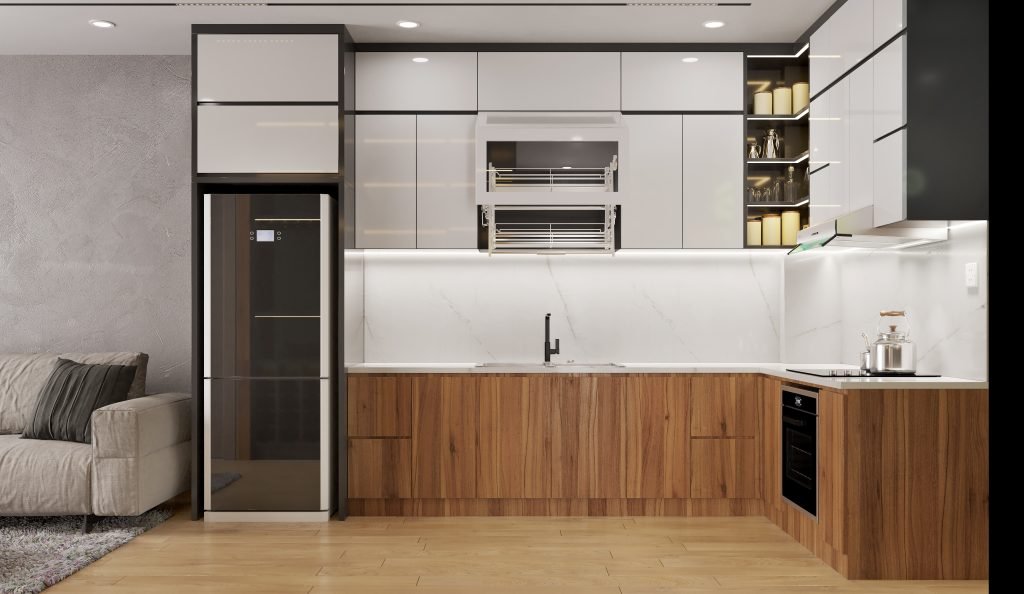
Can cladding be combined with other materials such as HPL or wood?
Yes — cladding can easily be combined with other materials such as HPL or wood for a more luxurious, coordinated design. Many people use HPL for worktops or drawers, thanks to its range of colours and its ability to withstand daily use, while cladding is preferred for fronts and corners because it combines durability and easy cleaning.
Wood is often used for shelves or open units to add a warm, natural touch, while cladding stays on the outer fronts to give the kitchen a modern, elegant look without losing strength or ease of care.
This combination creates the perfect balance between practical beauty and modern luxury.
Finally, cladding has become one of the most popular kitchen types in recent years, thanks to its high durability and resistance to moisture and heat, and its wide range of designs and colours that give your kitchen an attractive look. It is also important to know the pros and cons of cladding kitchens, and to consider combining materials such as HPL or wood. Contact Light Star for advice on your kitchen.