
In interior design, kitchens and bathrooms, choosing a surface material is an important decision that affects the look, the quality and the lifespan of the space. Corian and quartz are both premium options, and each has its own properties and ideal uses.
What is the difference between Corian and quartz?
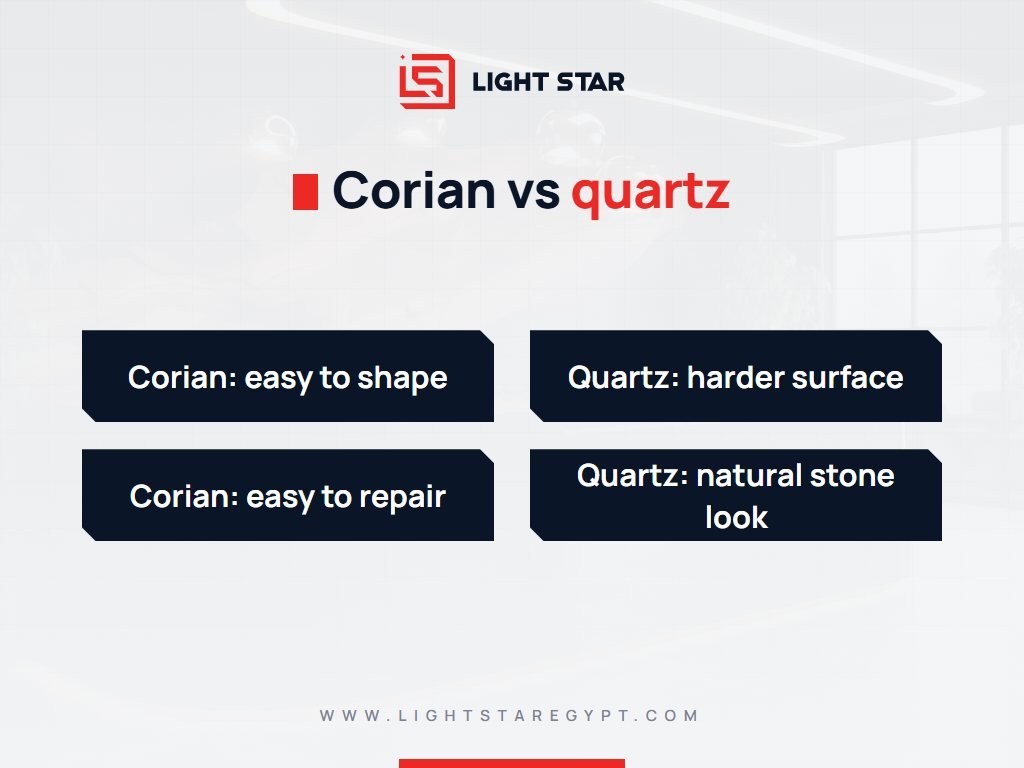
Corian is a flexible, easy-to-shape engineered material, ideal for contemporary designs and easy to repair. It has a smooth feel, comes in many colours and resists bacteria.
Quartz is harder and heavier, but less flexible and harder to modify or repair. That is why Corian is the better choice for anyone looking for an elegant, easy-to-maintain design.
1. Composition and base materials
- Corian: an engineered material made from a blend of acrylic and natural minerals, which makes it flexible and easy to shape. It can be cut and formed to suit different designs.
- Quartz: made mostly from natural quartz, bound with resins and pigments. This makes it strong, with a natural, stone-like appearance.
2. Look and appearance
- Corian: available in many colours and options, with a smooth, uniform surface that feels contemporary. It is ideal for curved designs and soft edges.
- Quartz: looks like natural stone, with beautiful patterns resembling marble or granite, and gives spaces a luxurious, elegant touch.
3. Strength and durability
- Corian: moderately durable compared with quartz. It resists scratches and corrosion, but is less heat-resistant.
- Quartz: highly resistant to scratches and staining, and more durable than Corian, which makes it suitable for heavily used spaces.
4. Resistance to heat and moisture
- Corian: moisture-resistant and widely used in bathrooms, but it does not tolerate high temperatures.
- Quartz: can withstand relatively high temperatures, but may crack if very hot pans are placed directly on it.
5. Cleaning and care
- Corian: easy to clean, needs no special care, and surface scratches can be removed easily.
- Quartz: does not absorb liquids, so it resists stains, but it should be cleaned with non-abrasive cleaners to protect its surface.
6. Price and cost
- The price of both Corian and quartz depends on quality and brand, but in general quartz costs more than Corian because of its hardness and natural look.
7. Best uses
- Corian: preferred where design flexibility matters, such as bathrooms or kitchens with distinctive designs.
- Quartz: an ideal choice for commercial kitchens or homes that need tough surfaces built to last for many years.
How to choose between Corian and quartz
- Durability: quartz is more durable and resists scratches and stains, making it suitable for heavy kitchen use.
- Look: Corian offers a contemporary, flexible look that suits distinctive designs, while quartz resembles natural stone and adds a luxurious touch.
- Heat: quartz tolerates higher heat, so it is the better option if you often put hot pans directly on the surface.
- Maintenance: both are easy to clean, but quartz resists stains better, while scratches in Corian are easy to repair.
- Cost: Corian costs less, while quartz is a higher investment in exchange for its look and durability.
Conclusion
Choosing between Corian and quartz comes down to your needs and preferences. If you prefer design flexibility and a smooth surface, Corian is a great choice. If you are looking for a very durable material with a luxurious, natural look, quartz is the better fit.