In finishes and interior design, many materials are known for quality and durability. Among them, HDF and HPL are popular choices for furniture, flooring and decorative work, but there are fundamental differences between them that make each suited to particular uses. Knowing the difference between HDF and HPL helps you choose the right material for your needs. In this article we explain the difference and how to pick the best option for you.
What is HPL flooring?
HPL (High-Pressure Laminate) flooring is one of the strongest options in modern flooring. It consists of several layers pressed together under high heat and pressure, which makes it resistant to wear, scratches and moisture.
Comparing HDF and HPL for flooring, HPL stands out for its realistic wood look and its resistance to bacteria and stains, which makes it ideal for hygienic environments such as clinics and kitchens. It is also easy to install, making it a practical, modern choice.
You can also explore the best kitchen types and how to choose the right one for you.
What is HDF?
Before comparing HDF and HPL, it helps to know what HDF (High-Density Fiberboard) is.
HDF is a high-density engineered wood made from wood fibres compressed under high pressure and heat. Its high density makes it stronger and more resistant to moisture and wear than lower-density boards.
Although HDF does not match HPL’s resistance to scratches and wear, it provides a strong, versatile base for interior finishes.
The difference between HDF and HPL
When choosing materials for interior finishes, it is essential to understand how HDF and HPL differ, since each has properties that suit specific uses. Here are the main differences:
Composition and raw materials
HDF: made of densely compressed wood fibres, which give it durability and strength. It is manufactured under high pressure and heat to produce a strong, uniform board.
HPL: multiple layers of resin-impregnated paper pressed together under high heat, forming a surface layer that resists scratches, moisture and wear.
Uses
HDF: mainly used for laminate (parquet) flooring, doors and furniture that needs a strong inner core.
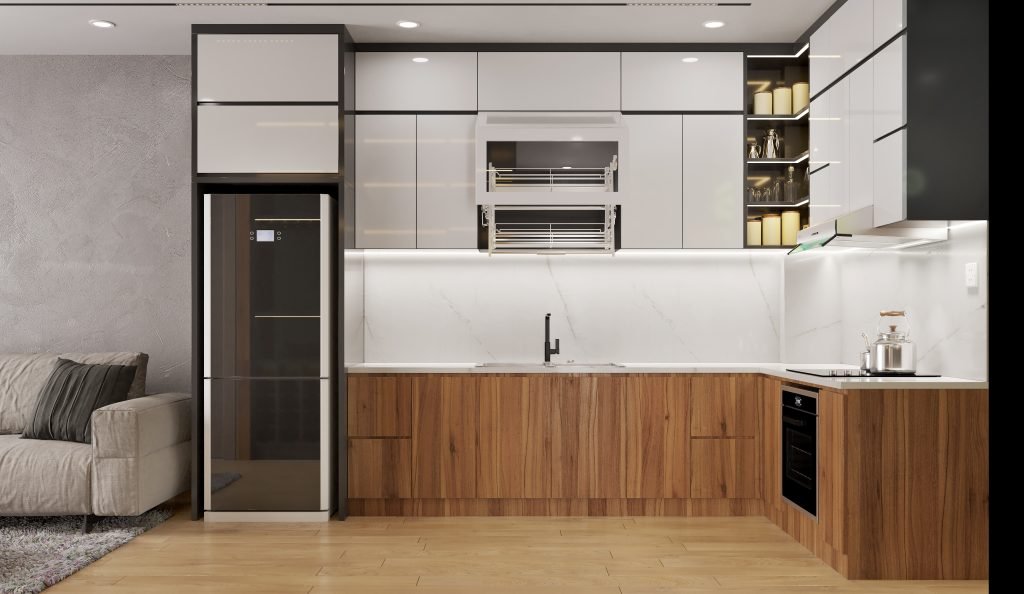
HPL: used as a finishing layer on surfaces such as office furniture, kitchens, tables and decorative walls, thanks to its good looks and ability to handle heavy daily use.
Resistance to external factors
HDF: has limited moisture resistance and can be affected by water if it is not properly treated.
HPL: highly resistant to moisture, heat and scratches, making it ideal for surfaces exposed to friction and intensive use.
Lifespan
HDF: has a long service life, but can be affected by environmental factors such as high humidity.
HPL: thanks to its high wear resistance, it lasts even longer.
What are HDF and HPL used for?
Now that we know the difference between HDF and HPL, here are the main uses of each:
Uses of HDF
- Wood flooring: used to make laminate parquet thanks to its strength and wear resistance.
- Security doors: provides strength with low weight, and can be finished with layers such as HPL or melamine.
- Home and office furniture: used for tables and cabinets in modern, economical designs.
- Decorative walls: used for interior partitions or decorative walls that can be painted or veneered.
Uses of HPL
- Kitchen and bathroom surfaces: resistant to moisture and heat, making it ideal for areas exposed to water.
- Interior walls in public spaces: used in hotels and hospitals for its durable, easy-to-clean surface.
- Tables and high-contact surfaces: suited to offices and restaurants thanks to its high wear resistance.
HDF vs HPL: price
Prices of HDF and HPL vary with quality, thickness and end use. In general:
HDF: more economical than HPL. It is used as a base for furniture and flooring, which makes it a popular choice for anyone looking for a strong material at a reasonable cost. Prices vary with quality and density, but it remains cheaper than HPL, especially in large quantities.
HPL: costs a little more, since it is manufactured with advanced techniques to resist scratches, moisture and heat. It comes in economical grades as well as premium, higher-priced ranges.
In short, if you want an economical, durable option, HDF may be the better fit; if you need a high-quality finish that stands up to tough use, HPL is the better choice. That is the difference between HDF and HPL in value for money.
How to choose between HDF and HPL
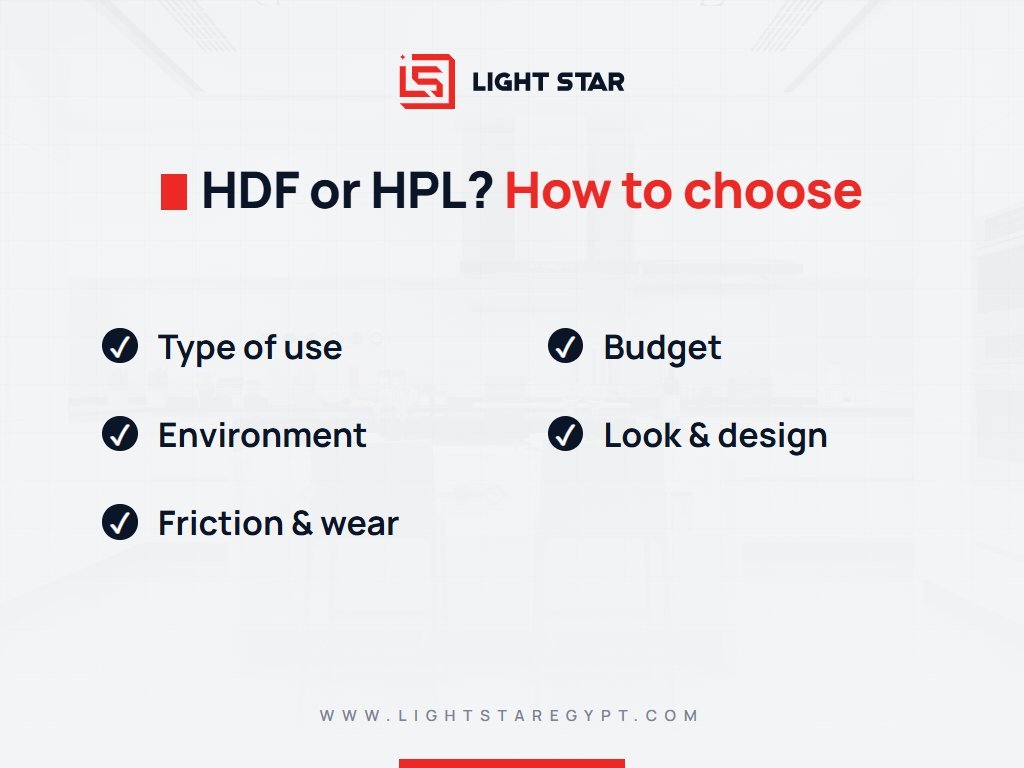
To make the right decision, consider these factors:
Type of use
If you need a strong material for furniture carcasses, flooring or doors, HDF is the better choice, offering durability and easy fabrication.
If you need a finishing layer that resists scratches and moisture, HPL is ideal, especially in kitchens, offices and humid areas.
Budget
On a limited budget, HDF gives you good quality at a lower price, which suits cost-sensitive projects.
If you are willing to pay more for longer-lasting quality, HPL adds value through its resistance to external factors and its long service life.
Environment
In humid environments such as bathrooms, or hot ones such as kitchens, HPL is the better choice thanks to its excellent water and heat resistance.
In dry, enclosed spaces, HDF performs well, especially if it is treated for moisture resistance.
Look and design
If you want a premium final look with a wide range of colours and patterns, HPL offers more design variety.
If you need a solid material that can be painted or covered with decorative layers, HDF gives you the strong base for it.
Exposure to friction and wear
If you need a surface that handles intensive daily use, HPL is ideal thanks to its high resistance to scratches and wear.
HDF is strong, but needs extra protection where it will face a lot of friction.
Knowing the difference between HDF and HPL, it is clear that each material has its own role in finishes and interior design. If you need a strong, durable base for furniture or flooring, HDF is ideal; if you need a surface that resists scratches and moisture, HPL is the better option. The choice depends on the type of use and your budget. Light Star supplies top-quality HDF and HPL, with benefits including:
- A 10-year warranty
- Free installation
- After-sales service
- Fast delivery
Have a question? Send it to us and we will get back to you as soon as possible.