
In interior design and furniture, choosing the right materials is an essential step towards a complete, practical space. Among the options on the market are poly-lacquer and HPL (high-pressure laminate). Each has unique properties that suit particular situations, with clear differences in advantages, drawbacks, price and use. In this article we look in detail at the difference between poly-lacquer and HPL, help you choose the right one for your needs, and explain what Light Star offers.
What are poly-lacquer and HPL?
Poly-lacquer
Poly-lacquer is a glossy finish used mainly to coat surfaces for an elegant, contemporary look. It is used mostly in contemporary furniture and desk tops. Its glossy, level surface reflects light, making it an ideal choice for spaces that want a modern, luxurious feel.
Poly-lacquer is produced through a multi-step process that delivers a high-quality surface. Design options range across many colours and patterns, giving designers room for artistic touches. It is a popular choice for projects where the look of the surface comes first.
HPL (High-Pressure Laminate)
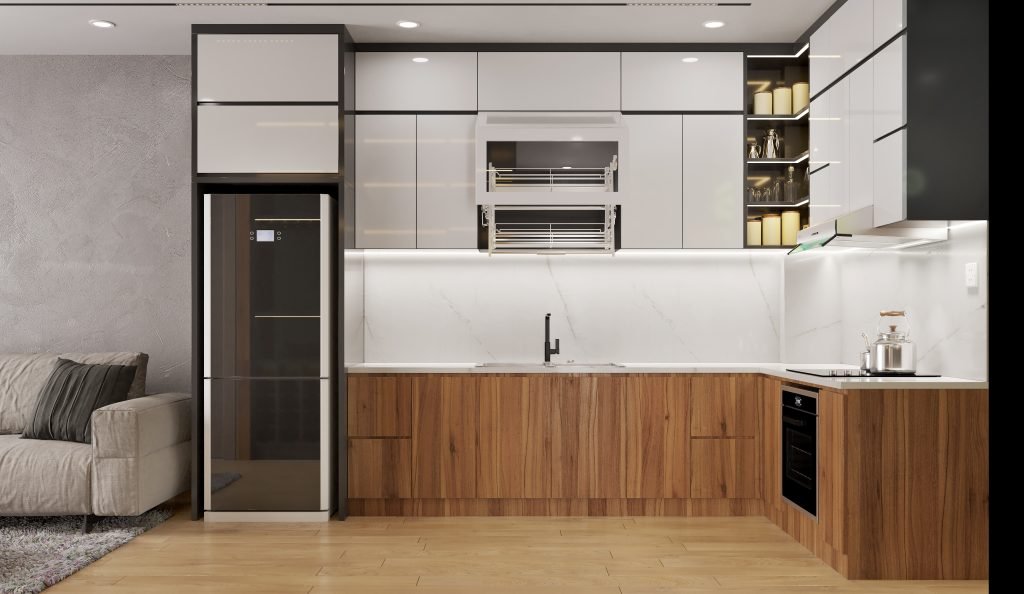
HPL, on the other hand, is a laminate manufactured under high pressure from layers of resin-impregnated paper, formed under high temperature and pressure. This process makes HPL extremely hard and resistant to scratches and heat. It is used in many practical applications that demand durability, such as kitchen, bathroom and office surfaces.
HPL is more resistant to moisture and wear than poly-lacquer, making it the ideal choice for high-traffic spaces or areas exposed to humidity and heat.
Poly-lacquer vs HPL: advantages and disadvantages
Poly-lacquer
Advantages
- A glossy, contemporary finish: poly-lacquer gives surfaces a glossy final touch with a modern, luxurious look — an excellent option if you want to add elegance to an interior.
- Easy cleaning and maintenance: thanks to its smooth surface, it cleans easily with a damp cloth, making it ideal for low-maintenance furniture and surfaces.
- A wide choice of colours and patterns: you can choose from a wide range of colours and designs for every taste, from calm tones to bold designs.
Disadvantages
- Sensitive to scratches: because of its glossy surface, poly-lacquer can scratch easily, which may affect its look over time, especially in high-traffic areas.
- Can be affected by humidity: although poly-lacquer resists moisture to a degree, it doesn’t stay as durable in humid environments over long periods, which can lead to warping or a loss of quality.
HPL
Advantages
- High resistance to scratches and heat: HPL is ideal for spaces that need scratch and heat resistance, such as kitchens and offices. Made under high pressure, it is exceptionally hard and handles high temperatures.
- Moisture resistance: HPL is one of the most moisture-resistant materials, making it suitable for humid places such as bathrooms.
- A modern, versatile look: despite being more wear-resistant, HPL comes in a variety of innovative designs and modern patterns that add beauty to any space.
Disadvantages
- Higher cost: HPL costs more than poly-lacquer because of its complex manufacturing process and materials, so it may not be ideal on a tight budget.
- Less variety in colours and patterns: compared with poly-lacquer, HPL may offer less variety in colours and patterns, which can limit the options.
Price
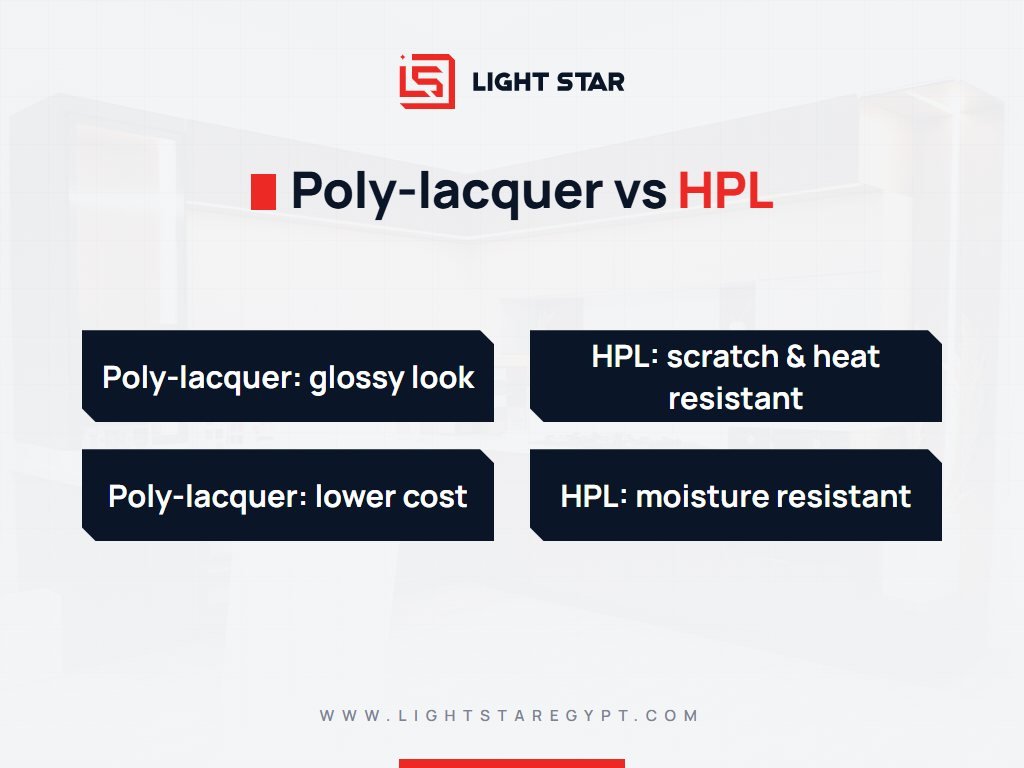
The price of poly-lacquer and HPL depends on factors such as quality, project size and the client’s requirements. Poly-lacquer usually costs less than HPL, making it a suitable choice for many projects with a limited budget. But if you want a material with high resistance to heat, scratches and moisture, you may find HPL worth the extra cost.
If you want a contemporary-looking material but don’t need a high level of durability, poly-lacquer is the ideal choice. If you are looking for durability and longevity for demanding environments or places constantly exposed to heat and humidity, consider HPL as a long-term investment.
How to choose between poly-lacquer and HPL
The right material depends on your needs and the type of project:
- If you need a contemporary, easy-to-maintain look: poly-lacquer is ideal, especially for interior surfaces in living rooms or bedrooms, where you can enjoy its elegant shine.
- If you need scratch and heat resistance: HPL may be the better choice, especially in humid or hot environments such as kitchens and bathrooms.
- Budget: on a limited budget, poly-lacquer offers good quality at a lower cost. If you are ready to invest in a strong, long-lasting material, HPL offers benefits that go beyond its cost.
What Light Star offers
At Light Star, we know that choosing the right material is a decisive step in designing a space. That is why we offer a wide range of poly-lacquer and HPL options, all of high quality to meet your requirements.
What sets us apart:
- Free consultations: comprehensive advice to help you choose the material that fits your real needs.
- A wide choice of designs: whether you want poly-lacquer or HPL, we offer a wide range of colours and patterns for every taste.
- Professional installation: our team delivers high-quality installation for the best results.
- Competitive prices: great value without compromising on quality.
If you are looking for the right solutions for your interior surfaces or furniture, Light Star is the place to start.
Conclusion
Choosing between poly-lacquer and HPL depends on design, durability and budget. Both offer exceptional advantages, but the final decision depends on your specific needs. At Light Star, we help you make the right choice, with products and services that meet your expectations. Contact us today for a free consultation.